In the fast-growing textile industry, non woven manufacturers in India play a vital role in providing fabrics used across packaging, medical, agriculture, and home furnishing sectors. With increasing demand for quality and durability, buyers must ensure that the materials they source meet global quality standards. Understanding the key testing parameters for non-woven fabrics helps both manufacturers and customers achieve consistency, reliability, and performance.
Understanding the Importance of Quality in Non-Woven Fabrics
Non-woven fabrics are made using advanced processes like spunbond, meltblown, or needle-punched bonding instead of traditional weaving. This gives them unique properties such as lightweight strength, softness, and breathability. However, variations in GSM, fiber bonding, or treatment quality can impact their performance.
To ensure consistent results, leading non woven manufacturers in India follow strict quality control protocols, testing their products at every stage of production, from fiber selection to finishing.
Key Quality Testing Parameters for Non-Woven Fabrics
Quality testing ensures that non-woven materials meet the required technical and performance specifications. Below are the major parameters that reputable non woven manufacturers in Hyderabad and across India test before delivery.
1. GSM (Grams per Square Meter)
GSM is one of the most crucial parameters that determine the weight and thickness of the non-woven fabric.
Higher GSM indicates denser and stronger fabric, ideal for heavy-duty applications.
Lower GSM fabrics are lighter and suitable for hygiene or disposable uses.
Manufacturers test GSM regularly to maintain consistency. Any deviation can affect fabric strength and customer satisfaction.
2. Tensile Strength and Elongation
Tensile strength measures how much force the fabric can withstand before breaking. Non-woven materials are pulled in both machine and cross directions to ensure durability.
High tensile strength means better load-bearing capacity.
Good elongation ensures flexibility without tearing.
ISO-certified non woven manufacturers in India use modern testing equipment to monitor these metrics for industrial and medical-grade fabrics.
3. Thickness and Uniformity
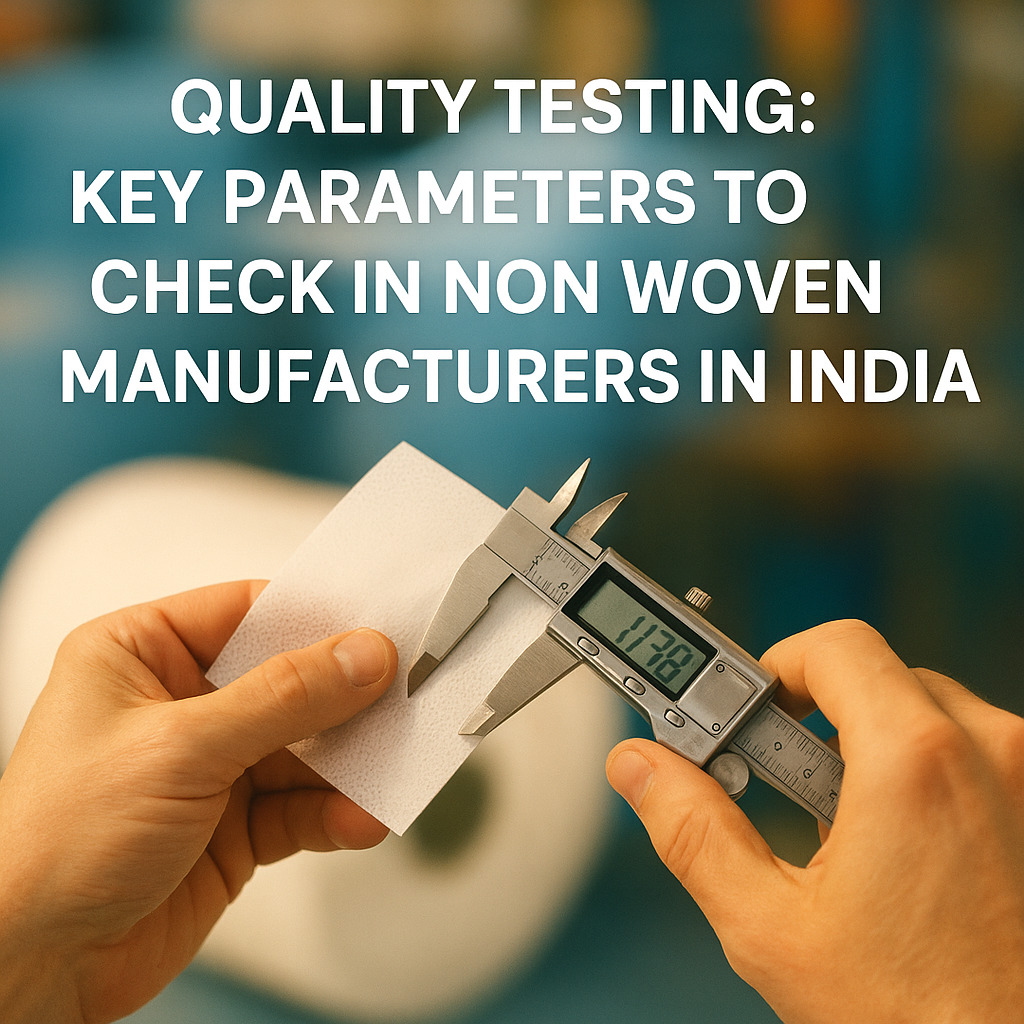
Thickness variation can lead to uneven product performance, especially in applications like filtration or packaging. Fabrics are tested with micrometers to ensure they have consistent thickness throughout the roll.
Uniformity in fiber distribution ensures the final product has equal strength and aesthetic appeal, a key factor buyers look for when sourcing from non woven manufacturers in Hyderabad.
4. Tear Resistance
Tear resistance testing helps evaluate how well the fabric can handle sudden stress or tearing during use.
For example, packaging and agricultural fabrics require high tear resistance to avoid failures during loading, transportation, or exposure to harsh conditions.
Top non woven manufacturers in India conduct tear resistance tests to guarantee dependable, long-lasting materials.
5. Air Permeability and Breathability
Breathability defines how much air passes through the fabric, a vital factor for medical and apparel applications.
Higher air permeability makes fabrics suitable for surgical masks and gowns.
Controlled permeability works best for agriculture or packaging needs.
Manufacturers test this using air permeability meters, ensuring each batch aligns with the buyer’s specifications.
6. Absorbency and Liquid Resistance
Depending on the end use, non-woven fabrics may need to either absorb or repel liquids.
For instance:
Hydrophilic fabrics are used in baby diapers and wipes.
Hydrophobic fabrics are ideal for protective gowns and medical covers.
Reputed non woven manufacturers in Hyderabad apply specialized surface treatments and run absorbency tests to achieve the desired balance.
7. UV Resistance and Color Fastness
Outdoor applications like crop covers and geotextiles require fabrics with strong UV resistance. Quality testing ensures that materials don’t degrade quickly under sunlight.
Color fastness testing is also crucial for decorative or branding purposes, ensuring colors don’t fade during washing or exposure to environmental elements.
8. Puncture and Impact Resistance
Certain industrial applications demand fabrics that resist puncture or abrasion. ISO-certified non woven manufacturers in India test their fabrics for impact resistance to ensure safety and reliability in demanding environments like automotive and construction.
Common Quality Issues and Their Solutions
Despite modern production systems, some non-woven manufacturers still face quality issues. Let’s look at common problems and how they can be resolved.
| Problem | Impact | Solution |
|---|---|---|
| Inconsistent GSM | Uneven strength and performance | Regular calibration of GSM testing machines |
| Poor bonding | Fabric tears easily | Maintain correct temperature and pressure during bonding |
| Color variation | Reduces visual appeal | Use standardized dyeing and blending systems |
| Moisture retention | Weakens fibers over time | Proper storage and packaging with moisture barriers |
By addressing these issues through systematic testing, non woven manufacturers in Hyderabad can enhance their competitiveness in domestic and international markets.
Benefits of Strict Quality Testing for Manufacturers and Buyers
Both manufacturers and buyers benefit significantly from consistent quality checks.
For Manufacturers:
Reduced customer complaints and rejections
Enhanced brand reputation and export readiness
Improved process efficiency and cost control
For Buyers:
Assurance of performance and durability
Traceable, standardized quality across all orders
Confidence in bulk and long-term sourcing
In short, rigorous quality testing is a win-win for everyone involved in the non-woven supply chain.
Why Choose Certified Non Woven Manufacturers in Hyderabad
Hyderabad has emerged as one of India’s top hubs for non-woven fabric manufacturing. Certified non woven manufacturers in Hyderabad not only follow ISO 9001:2015 guidelines but also employ modern lab testing and inspection systems.
They offer customized GSM, width, and treatment options for a wide range of applications, from healthcare and furniture to agriculture and industrial packaging. For buyers seeking reliability and transparency, Hyderabad’s certified manufacturers are a trusted choice.
Savitridevi Polyfabrics – Setting New Standards in Quality
At Savitridevi Polyfabrics, we take pride in being among the most trusted non woven manufacturers in India. Our facilities in Hyderabad are equipped with advanced testing equipment to monitor every production stage, ensuring flawless results for our clients.
From GSM and tensile testing to UV resistance and absorbency analysis, every batch undergoes strict inspection before dispatch. Our mission is to deliver consistent, high-performance non-woven fabrics that meet global expectations.
Choose Savitridevi Polyfabrics, where innovation meets reliability and every fabric speaks of superior quality.
Conclusion
Quality testing defines the future of the non-woven industry. For manufacturers, it ensures better efficiency and brand value. For buyers, it builds trust and long-term relationships. Partnering with ISO-certified non woven manufacturers in India, especially from Hyderabad, guarantees fabrics that excel in performance, consistency, and durability.
At Savitridevi Polyfabrics, we don’t just manufacture non-wovens, we deliver assurance, one fabric at a time.