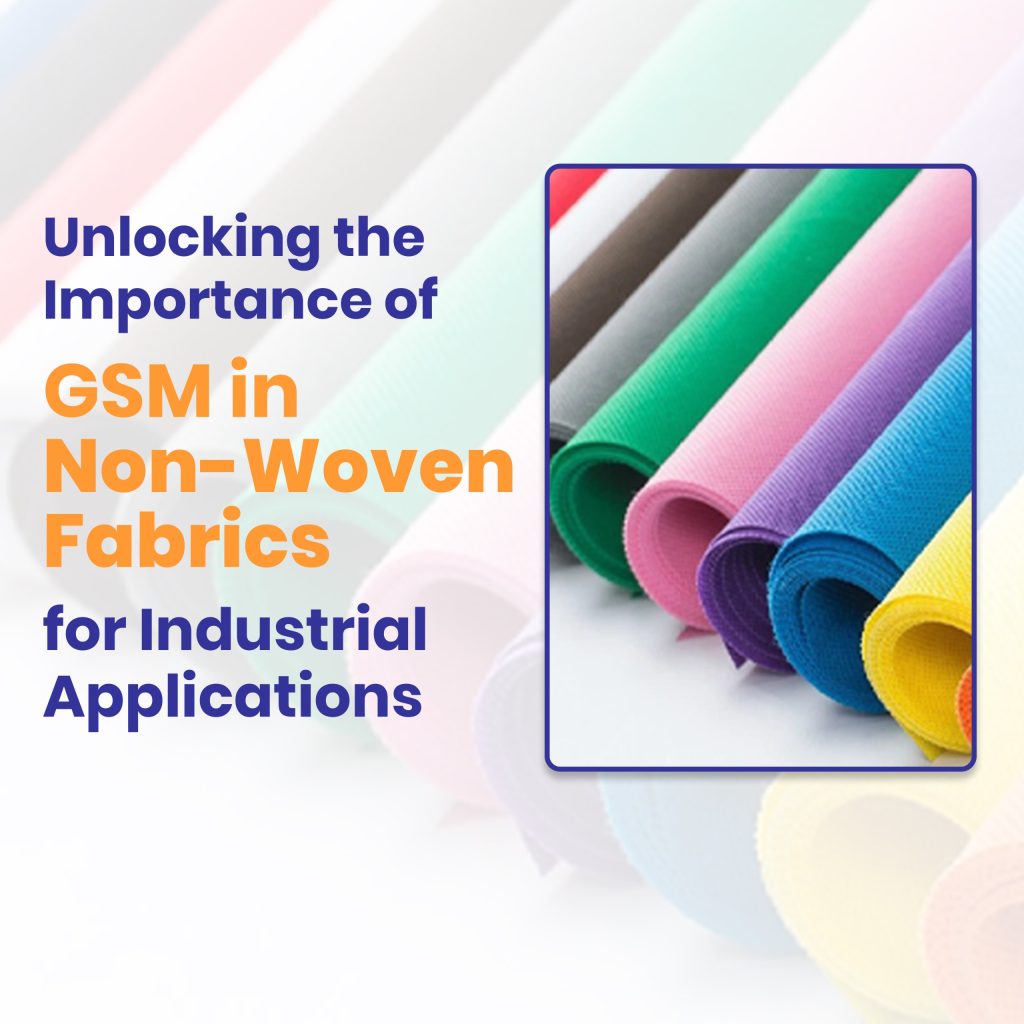
GSM in non woven fabrics is one of the most important quality parameters used to evaluate fabric performance in industrial and commercial applications. In India, non woven fabrics are widely used across multiple sectors, including packaging, healthcare, agriculture, construction, hygiene products, and manufacturing industries. As businesses move toward sustainable, reusable, and cost-effective materials, understanding GSM in non woven fabrics in India has become essential. GSM directly influences fabric strength, thickness, durability, and load-bearing capacity. It also affects how the fabric behaves under continuous usage and environmental stress. Because of this, manufacturers and buyers now treat GSM as a critical decision-making factor rather than a technical detail.
With the rapid growth of non woven fabric usage, Indian industries are becoming more quality-conscious. Buyers now expect consistency, reliability, and predictable performance from non woven materials. This is especially true for companies sourcing materials from non woven fabric manufacturers in Hyderabad, where large-scale industrial production supports nationwide demand. Choosing the correct GSM helps businesses reduce material failure, minimize wastage, and improve overall efficiency. It also ensures compliance with application-specific requirements, making GSM knowledge essential for long-term operational success.
What Is GSM in Non Woven Fabrics
GSM stands for grams per square meter and refers to the weight of the fabric measured over one square meter area. In simple terms, GSM indicates how heavy or light a non woven fabric is. A higher GSM generally means the fabric is thicker, denser, and stronger. A lower GSM indicates a lighter and more flexible fabric. In India, GSM is used as a standard measurement to classify non woven fabrics for different industrial and commercial uses.
Understanding what GSM in non woven fabric in India means allows businesses to select materials more accurately. For example, industries that require lightweight and disposable products prefer low GSM fabrics. On the other hand, applications that demand strength and durability depend on higher GSM materials. GSM also plays a key role in maintaining uniform quality during bulk production. This consistency is critical for manufacturers supplying large orders to industrial buyers.
GSM Meaning in Non Woven Fabrics in India
The GSM meaning in non woven fabrics in India goes beyond simply measuring fabric weight. GSM directly affects fabric thickness, tear resistance, flexibility, and overall durability. Indian industries use GSM as a benchmark to compare different fabric qualities and ensure suitability for specific applications. Even small variations in GSM can significantly impact product performance, especially in industrial environments.
Non woven fabric manufacturers in India follow predefined GSM standards to meet customer and industry expectations. Accurate GSM control ensures consistent output across multiple batches. For buyers, this consistency translates into predictable performance and fewer quality-related issues. As a result, GSM has become one of the most important parameters for industrial procurement and quality assurance in India.
Importance of GSM in Non Woven Fabric for Industrial Use
The importance of GSM in non woven fabric is especially evident in industrial applications where performance and safety are critical. Higher GSM fabrics provide increased tensile strength and better load-bearing capacity. This makes them suitable for heavy-duty uses such as industrial packaging, protective covers, insulation layers, and commercial carry bags. These applications require materials that can withstand repeated handling and harsh conditions.
Lower GSM fabrics are preferred for applications where flexibility, breathability, and cost efficiency are more important. However, selecting an incorrect GSM can lead to premature product failure or reduced functionality. This is why industrial buyers across India carefully evaluate GSM specifications before finalizing materials. Proper GSM selection ensures durability, operational efficiency, and long-term cost savings.
Non Woven Fabric GSM Range in India
The non woven fabric GSM range in India varies depending on industry requirements and end-use applications. Low GSM fabrics generally fall between 20 GSM and 50 GSM. These fabrics are lightweight and commonly used for disposable items, protective linings, and lightweight packaging solutions. While cost-effective, they are not suitable for heavy loads.
Medium GSM fabrics usually range from 60 GSM to 100 GSM. This range is widely used for non woven bags, promotional products, and general industrial applications. Medium GSM fabrics offer a balanced combination of strength, flexibility, and cost efficiency. High GSM non woven fabrics typically start from 120 GSM and can go higher depending on requirements. These fabrics are used for heavy-duty industrial applications where durability and strength are essential.
GSM for Non Woven Bags in India
GSM for non woven bags in India plays a crucial role in determining bag performance, durability, and customer satisfaction. Retail and promotional bags usually use medium GSM fabrics that can support regular usage while remaining cost-effective. These bags are designed to handle moderate loads and repeated use without tearing.
Industrial and commercial non woven bags require higher GSM to handle heavier weights and rough handling. Manufacturers carefully select GSM based on bag size, handle type, and intended use. Correct GSM selection improves product lifespan and reduces customer complaints. It also enhances brand reputation, as durable bags reflect product quality and reliability.
Spunbond Non Woven Fabric GSM in India
Spunbond non woven fabric GSM in India is widely preferred for industrial and commercial applications due to its uniform structure and high strength. The spunbond process involves bonding continuous filaments together, resulting in consistent fabric quality. GSM control is critical in this process to ensure uniform thickness and reliable performance.
Spunbond fabrics are used in packaging, agriculture, medical products, hygiene applications, and industrial coverings. Consistent GSM ensures that the fabric performs well under pressure and environmental exposure. This reliability makes spunbond non woven fabrics a popular choice across Indian industries.
PP Non Woven Fabric GSM in India
GSM directly influences how PP non-woven fabrics perform in different industrial environments.
Manufacturers closely monitor GSM during production to meet precise customer specifications. Proper GSM control ensures strength without unnecessary material usage. This improves cost efficiency while maintaining high quality standards. As a result, PP non woven fabrics are widely used across India for industrial and commercial purposes.
Industrial Applications of GSM-Based Non Woven Fabrics in India
Industrial non woven fabrics in India are used across sectors such as packaging, construction, automotive, agriculture, and healthcare. Each industry requires specific GSM ranges to meet functional needs. For example, agricultural covers require medium GSM for durability and breathability. Industrial packaging often requires high GSM for added strength and protection.
Understanding GSM helps industries select suitable materials for their operations. It also allows manufacturers to recommend appropriate fabric types, reducing the risk of product failure. GSM-based selection improves safety, efficiency, and long-term performance in industrial applications.
Role of Non Woven Fabric Manufacturers in Hyderabad
Non-woven fabric manufacturers in Hyderabad play a major role in supplying GSM-specific fabrics to industries across India. Hyderabad has become a key manufacturing hub due to its strong infrastructure, skilled workforce, and efficient logistics network. These advantages support large-scale industrial production.
Manufacturers in Hyderabad follow strict quality control processes to maintain accurate GSM levels. This ensures consistent fabric performance across batches. Businesses prefer sourcing from Hyderabad due to reliable supply, faster delivery, and consistent quality standards.
Quality Control and GSM Consistency
Maintaining GSM consistency is a critical part of quality control in non woven fabric manufacturing. Variations in GSM can lead to uneven strength, poor durability, and reduced product performance. Manufacturers implement regular testing and monitoring to ensure uniform GSM throughout production.
Consistent GSM helps businesses achieve predictable results and reduce material wastage. It also supports long-term partnerships between manufacturers and buyers. Quality-focused GSM control strengthens trust and reliability across the supply chain.
Conclusion
Understanding GSM in non woven fabrics in India is essential for selecting the right materials for industrial applications. GSM directly affects fabric strength, durability, and overall performance. Businesses that choose the correct GSM benefit from improved efficiency, reduced operational costs, and longer product life.
With experienced non woven fabric manufacturers in Hyderabad and across India, industries can source high-quality spunbond and PP non woven fabrics that meet precise GSM requirements. By focusing on proper GSM selection and quality control, businesses ensure consistent performance, sustainability, and long-term value in non woven fabric applications.
FAQs
1. Why is GSM important in non-woven fabrics?
GSM directly affects durability, load capacity, and performance in industrial and commercial applications.
2. What is the ideal GSM for non woven bags in India?
Most non-woven bags in India use 60–100 GSM, depending on usage and load requirements.
3. What is the common GSM range for non-woven fabrics in India?
Non-woven fabrics in India usually range from 20 GSM to 120 GSM or higher for heavy-duty use.
4. How do manufacturers in Hyderabad maintain GSM consistency?
Non-woven fabric manufacturers in Hyderabad use advanced machines and strict quality checks to control GSM accurately.
5. What does GSM mean in non woven fabrics?
GSM means grams per square meter and indicates the weight, thickness, and strength of non woven fabric.