In the fast-evolving world of textiles, non woven fabric suppliers in Hyderabad have established themselves as indispensable across industries like healthcare, agriculture, packaging, and automotive. Unlike woven or knitted fabrics, non-wovens are made by bonding fibers together through mechanical, thermal, or chemical processes. Their versatility largely depends on three critical factors GSM (Grams per Square Meter), width, and treatments. These parameters influence everything from durability to application suitability. For manufacturers and buyers alike, understanding these aspects is essential for making informed decisions.
In this blog, we’ll break down how GSM, width, and treatments impact non-woven fabric performance, while highlighting the expertise of Savitridevi Polyfabrics, one of the trusted non woven fabric suppliers in Hyderabad.
Understanding GSM in Non-Woven Fabrics
GSM (Grams per Square Meter) is a standard measure that represents the weight of fabric per square meter. In simple terms, it indicates how heavy or light a fabric is. As a result, a higher GSM usually means the material is heavier, denser, and more durable. On the other hand, a lower GSM suggests that the fabric is lighter, thinner, and more breathable. Therefore, this measurement becomes highly significant because it directly affects performance, cost, and suitability for different end-uses. In conclusion, understanding GSM helps in making informed decisions about fabric quality and application.
Why GSM Matters
Costing: Fabric pricing often depends on weight. Manufacturers calculate GSM to determine the fiber or polymer content required, making it vital for budgeting and raw material planning.
Quality Control: Consistency in GSM ensures product reliability. If a fabric’s GSM falls below specification, it may indicate poor bonding or defects, impacting final performance.
Fabric Performance: GSM influences opacity, strength, durability, and warmth. For example, a 300 GSM fleece will feel warmer and sturdier than a 150 GSM jersey.
Application Suitability: Every industry requires specific GSM ranges. Medical gowns, shopping bags, or geotextiles all rely on precise GSM calculations for safety and efficiency.
GSM Ranges for Common Applications
10–30 GSM: Ultra-lightweight products such as cotton pads or disposable masks.
30–60 GSM: Wet wipes, inner layers of face masks, or disposable hygiene products.
60–100 GSM: Medical supplies like bed sheets or surgical gowns.
100–150 GSM: Non-woven shopping bags, packaging materials.
150 GSM and above: Heavy-duty fabrics for geotextiles, furniture padding, or automotive linings.
By mastering GSM, companies like Savitridevi Polyfabrics deliver tailored solutions that meet diverse industrial requirements. This is why they’re recognized among the most reliable non woven fabric suppliers in Hyderabad.
How GSM Affects Fabric Performance
Durability and Strength: Higher GSM fabrics resist wear and tear, making them perfect for protective clothing, industrial filters, or heavy-duty bags.
Feel and Drape: Lower GSM fabrics are soft, breathable, and flowy ideal for lightweight clothing, bed linens, or comfort-driven products.
Porosity and Filtration: GSM affects pore size and breathability. High GSM materials trap particles better, which is why they’re used in filtration and medical protection.
Warmth and Insulation: Thick, high-GSM fabrics provide superior insulation, a property exploited in blankets, winter wear, and industrial thermal linings.
In essence, GSM bridges the gap between performance and application. Manufacturers like Savitridevi Polyfabrics specialize in producing fabrics across GSM ranges, ensuring customers get materials optimized for durability, comfort, or safety.
The Role of Width in Fabric Performance
While GSM determines density, width impacts usability and production efficiency. Fabric rolls are manufactured in different widths, and their dimensions play a direct role in cost-effectiveness and application suitability.
Production Efficiency
Wider rolls reduce the number of seams required, improving product integrity and reducing labor costs. For example, agricultural crop covers or large medical drapes benefit significantly from wider rolls.
Application Suitability
Medical & Hygiene: Wide rolls are essential for gowns, surgical drapes, or hospital bedding to ensure full coverage.
Agriculture: UV-resistant crop covers and mulching sheets require large, seamless spreads, made possible only with wide-width non-wovens.
Packaging & Industrial: The width of rolls defines the maximum size of shopping bags, packaging sheets, or protective industrial covers.
For businesses sourcing large-scale fabrics, the width dimension is just as critical as GSM. Trusted non woven fabric suppliers in Hyderabad, such as Savitridevi Polyfabrics, understand this nuance and offer customizable widths for different industries.
How Treatments Influence Fabric Performance
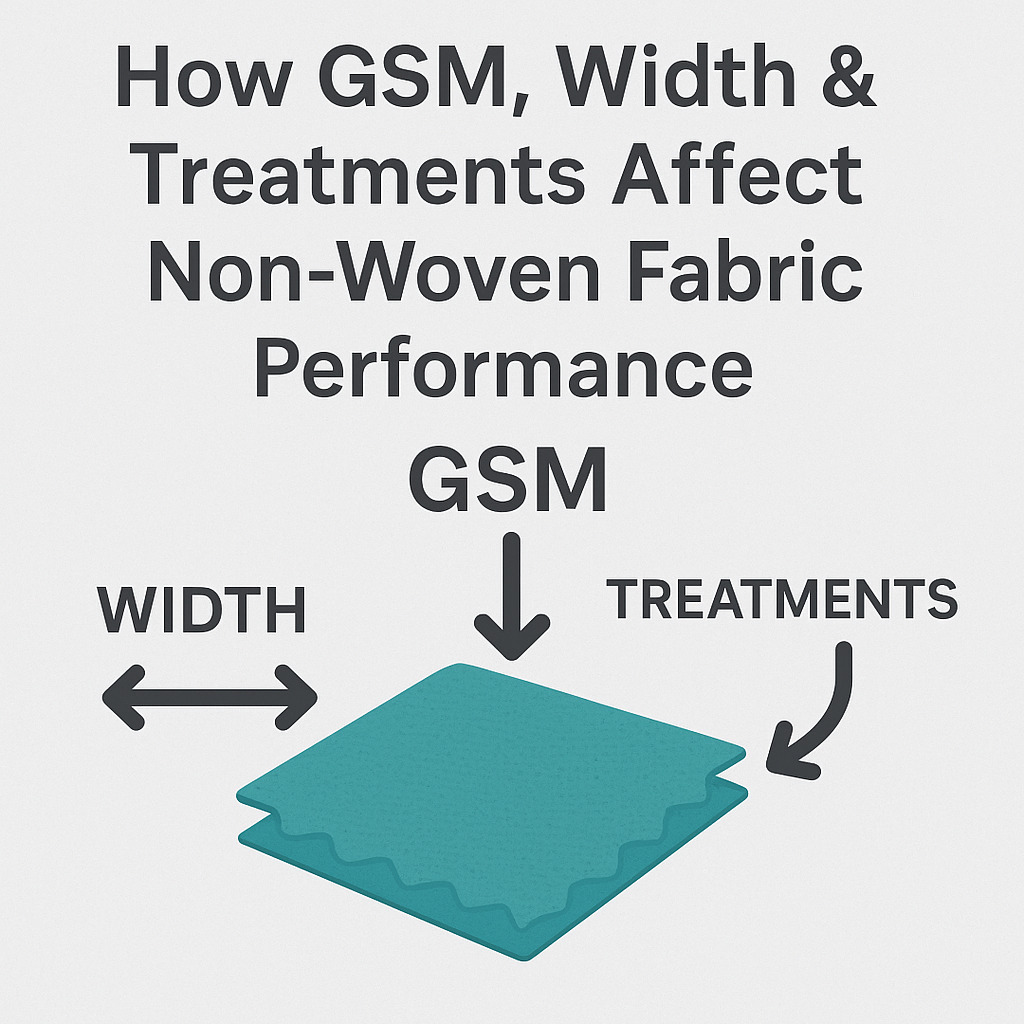
Beyond GSM and width, treatments give non-woven fabrics their specialized edge. By applying chemical, thermal, or mechanical processes, manufacturers can enhance properties to meet unique end-use requirements.
Common Treatments and Their Impact
We at Savitridevi Polyfabrics, non-woven fabric suppliers in Hyderabad, enhance the performance and versatility of our non-woven fabrics through specialized treatments tailored to diverse applications:
Hydrophobic Treatment – Repels water, making fabrics ideal for medical disposables, protective clothing, and packaging where moisture resistance is critical.
Hydrophilic Treatment – Absorbs moisture effectively, widely used in hygiene products such as diapers, sanitary napkins, and wipes that require softness and absorbency.
UV Treated Fabrics – Provide resistance against sunlight degradation, ensuring long-lasting performance in agricultural covers, shade nets, and outdoor applications.
Fire Retardant Finishes – Slow down flame spread, making them reliable for safety-oriented uses like mattress covers, furnishings, curtains, and industrial protective gear.
Anti-Microbial Finishes – Prevent bacterial growth, making fabrics highly suitable for healthcare, hygiene, and cleanliness-focused applications.
Laminated Fabrics – Enhance strength and add barrier properties, offering resistance against liquids, chemicals, and creating durable protective layers.
Roll-to-Roll Printing – Enables continuous branding, designs, or instructions printed directly on fabric rolls, ideal for commercial bags and covers.
Offset Printed Sheets – Deliver high-quality, multi-color printing on cut sheets, perfect for customized bags, folders, promotional items, and packaging solutions.
Why GSM, Width, and Treatments Must Work Together
Individually, GSM, width, and treatments each influence fabric performance. However, their combined effect is what makes non-wovens versatile and high-performing.
Medical Industry: A 60–100 GSM non-woven fabric, wide enough for full-body coverage, treated with water and microbial resistance, ensures safety for healthcare workers.
Agriculture: High-width, UV-treated fabrics in 40–70 GSM are ideal for protecting crops from sunlight and pests.
Packaging: Sturdy, 100–150 GSM non-woven bags rely on both strength and heat-sealed bonding to meet sustainability goals.
Automotive: High GSM fabrics treated for acoustic insulation and supplied in large widths enhance vehicle interiors.
This synergy shows why businesses must partner with reliable suppliers who can provide precision-engineered fabrics. Among non woven fabric suppliers in Hyderabad, Savitridevi Polyfabrics is known for balancing these parameters to deliver top-notch results.
The Savitridevi Polyfabrics Advantage
When it comes to non-woven fabrics, choosing the right supplier is just as important as choosing the right fabric specifications. Savitridevi Polyfabrics stands out because of its ability to deliver on three key fronts:
Customization: From GSM calculation to width adjustments and specialized treatments, every product is tailored to meet client-specific needs.
Quality Assurance: With strict quality checks, consistency in GSM, durability, and finish is guaranteed.
Industry Reach: Serving packaging, agriculture, healthcare, and automotive sectors, they understand the unique demands of each market.
Their reputation as trusted non woven fabric suppliers in Hyderabad has been built on years of delivering precision, performance, and reliability.
Conclusion
In the non-woven fabric industry, performance is never accidental it’s engineered through careful balancing of GSM, width, and treatments. GSM dictates weight and durability, width enhances usability and cost efficiency, and treatments provide the finishing touch for specialized applications.
Manufacturers like Savitridevi Polyfabrics exemplify how mastering these factors results in non-woven polypropylene bags that meet the diverse needs of industries ranging from healthcare to agriculture. For businesses searching for dependable non woven fabric suppliers in Hyderabad, choosing a partner that understands these dynamics ensures products that deliver quality, consistency, and long-term value.