Non-woven carry bags have quickly become the everyday alternative to single-use plastic across India. Moreover, they combine strength, low cost, and reusability in one lightweight package. Because shoppers, retailers, and brands all want greener options, demand keeps climbing each year. This complete guide explores the different types, applications, benefits, and manufacturing process of these widely used bags. In short, by the end you will know exactly what to look for before you buy.
These bags offer a fabric-like feel while providing a more cost-effective alternative to woven materials. Additionally, they carry heavy loads without tearing at the seams. As a result, businesses of every size now switch to them for packaging, retail, and promotions. Let’s explore the different types available in today’s market.
Popular Types of Non-Woven Carry Bags
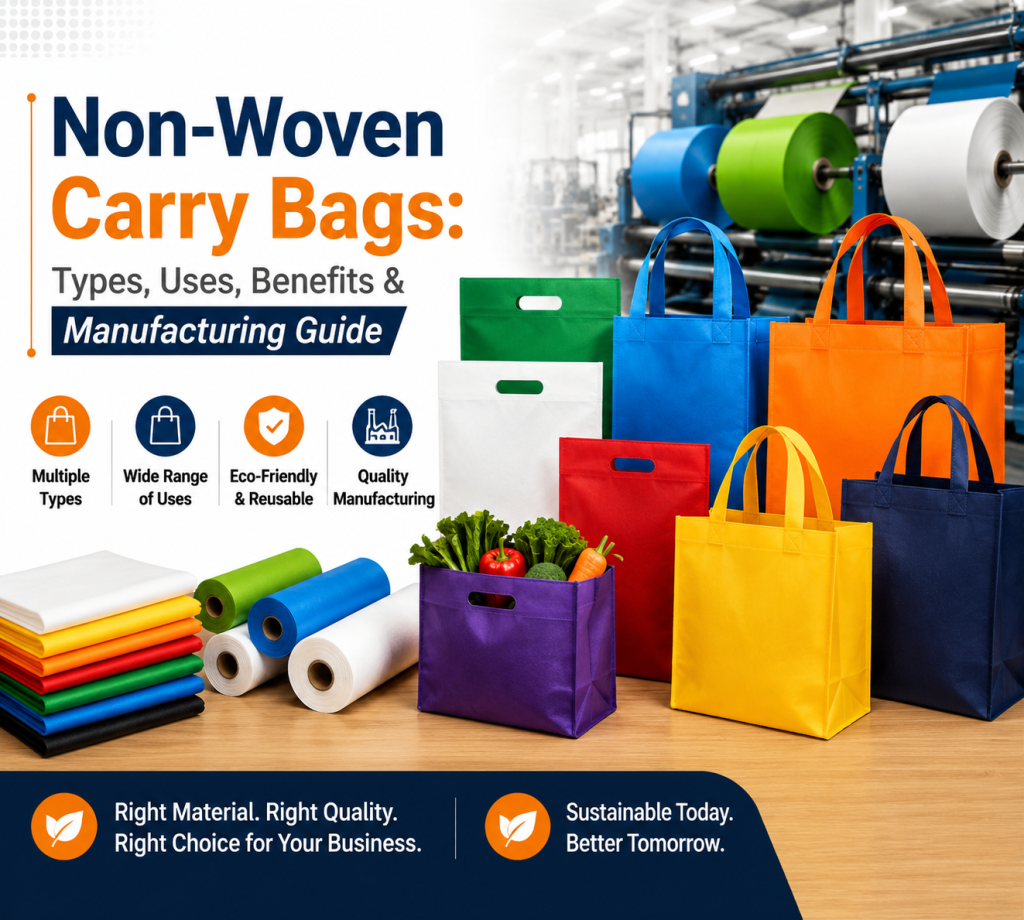
First, it helps to understand that non-woven carry bags come in several distinct styles. In fact, the common types of non woven bags range from simple handle cuts to premium box shapes. Each style suits a particular purpose, so choosing the right one matters. Below are the most common options you will find.
D-Cut and W-Cut Bags
D-cut bags feature a simple die-cut handle, and they work well for light retail use. Meanwhile, W-cut bags offer a gusseted base and side folds for extra volume. Consequently, shops often pick W-cut styles for groceries and bulkier goods.
Box Bags and Loop-Handle Bags
Box bags hold a rigid, rectangular shape, so they stand upright on shelves. In contrast, loop-handle bags add stitched or heat-sealed handles for comfort. Because both types look premium, brands love them for gifting and boutique packaging.
Printed and Custom Bags
Finally, printed non-woven carry bags turn everyday packaging into a marketing tool. For instance, a clear logo travels across the city every time a customer walks by. Therefore, custom printing gives small brands cheap, mobile advertising.
Everyday Uses of Non-Woven Shopping Bags
Next, let us look at where these bags actually add value. In truth, the uses of non-woven carry bags stretch far beyond the checkout counter. Below are the settings where they shine most.
Retail businesses use them extensively for their ability to carry clothing, books, groceries, and other everyday products conveniently. Supermarkets hand them out at billing, since they replace flimsy plastic and please eco-conscious shoppers.
Pharmacies also prefer them for lightweight, hygienic, and breathable packaging of medicines and healthcare products.
Beyond retail, event organisers order branded bags for conferences and trade shows. As a result, attendees carry brochures home while spreading the brand name. Meanwhile, restaurants pack takeaway orders inside sturdy non-woven carry bags that resist grease and moisture. Furthermore, textile and footwear brands use them as dust covers for premium products. Clearly, these reusable non-woven shopping bags fit almost any industry.
Key Benefits of Eco-Friendly Non-Woven Bags
Now, consider why so many buyers make the switchThe growing demand for non-woven bags is driven by their versatility, durability, and practical benefits across industries.
Strong Yet Lightweight
These bags stay light, yet they still hold surprising weight. The interconnected fibre structure distributes weight evenly, helping the base maintain its strength under pressure. Therefore, customers trust them for heavy grocery runs.
Reusable and Eco-Friendly
Unlike thin plastic, eco-friendly non-woven bags survive dozens of trips. Consequently, one bag replaces many single-use ones over its lifetime. Moreover, they reduce plastic waste, which supports India’s ban on single-use plastic. As a result, brands that adopt them earn genuine goodwill.
Affordable and Customisable
Above all, these bags stay budget-friendly even at small order sizes. So a startup can look professional without a large marketing spend. Ultimately, low cost and high impact make them a smart choice.
How Non-Woven Carry Bags Are Made: The Manufacturing Process
Understanding the non woven bag manufacturing process helps you judge quality with confidence. Essentially, non-woven carry bags begin as polypropylene granules and end as finished, printed products. The journey moves through several careful stages.
Step 1: Fabric Extrusion (Spunbond Process)
To begin, machines melt virgin polypropylene granules at high temperature. Next, they push the molten polymer through fine spinnerets to form continuous fibres. Then hot air spreads these fibres onto a moving belt. Finally, heated rollers bond the fibres together, and the result is a smooth, strong spunbond sheet.
Step 2: Lamination and Printing
Afterwards, some rolls pass through lamination for a glossy, water-resistant finish. Because registration stays tight, the print looks crisp on every bag.
Step 3: Cutting and Stitching
Subsequently, cutting machines shape the fabric into panels and handles. Then stitching or ultrasonic sealing joins the pieces into a finished bag. As a result, the seams stay firm even under repeated loading. Throughout the line, quality checks confirm consistent GSM, colour, and strength. Therefore, buyers receive reliable.
Choosing the Right GSM for Non-Woven Carry Bags
GSM, or grams per square metre, decides how thick and strong a bag feels. Naturally, the correct GSM depends on the load you plan to carry.
Lightweight grades near 40 to 60 GSM suit promotional handouts and light retail. Medium grades around 70 to 90 GSM handle groceries and daily shopping with ease.Higher GSM grades above 100 GSM provide the strength needed for carrying books, tools, and heavier items securely. So, before you order, match the GSM to your real use case. In this way, you avoid both weak bags and needless extra cost.
Tips to Buy Quality Non-Woven Carry Bags
Before you place an order, a few checks protect your money. Firstly, confirm that your Non Woven Carry Bags Manufacturer makes the fabric in-house rather than buying it in. Secondly, ask whether the material is virgin polypropylene, since virgin stock stays cleaner and stronger. Thirdly, request a physical sample to test the feel, print, and stitching.
In addition, compare quotes carefully, because unusually low prices often signal recycled material. Furthermore, check for certifications such as ISO 9001, which prove steady quality systems. If you need branded designs, pick a Customized Non Woven Bags Manufacturer with in-house printing and flexible tooling. Consequently, these simple steps help you buy with total confidence.
Why Non-Woven Carry Bags Suit Modern India
India continues to move away from single-use plastic, and these bags fit that shift perfectly. Because they cost little yet last long, they satisfy both budgets and green goals. Moreover, they support local branding through easy custom printing. Therefore, retailers, event planners, and exporters all keep them in steady demand. In every sense, match the needs of a fast-changing, eco-aware market.
Conclusion
To sum up, non-woven carry bags deliver strength, affordability, and genuine environmental value in one product. Throughout this guide, you have seen their types, uses, benefits, and manufacturing process in clear detail. Additionally, you now know how to pick the right GSM and how to spot a trustworthy supplier. So the next step is simple: define your use case, request a sample, and order with confidence. Ultimately, the right bag protects both your goods and your brand image.
If you plan to source the bulk, choose a Non Woven Carry Bags Manufacturer in India with in-house production, virgin material, and reliable certifications. Moreover, the Best Non Woven Carry Bags Manufacturer in India will offer custom sizes, printing, and a full GSM range under one roof. In doing so, you gain consistent quality and long-term peace of mind.
📞 Order Non-Woven Carry Bags
Looking for a dependable non-woven carry bags manufacturer in India? Blue Horse® by Savitridevi Polyfabrics produces in-house from virgin polypropylene at its ISO 9001:2015 certified facility in Hyderabad — with a full GSM range, custom sizes, and in-house printing under one roof.
Request a free sample, discuss custom designs and bulk pricing, or speak to our specialists about the right GSM and style for your business. Blue Horse® — trusted for quality.
FAQs
1. What is the difference between D-cut, W-cut, and box non-woven carry bags?
D-cut bags have a simple die-cut handle and suit light retail use. W-cut bags add a gusseted base and side folds for more volume, making them ideal for groceries.
2. Which GSM is best for non-woven carry bags?
Match the GSM to your load. Lightweight 40–60 GSM suits promotional handouts and light retail, medium 70–90 GSM handles daily groceries and shopping, and grades above 100 GSM carry books, tools, and bulk items.
3. Are non-woven carry bags eco-friendly and reusable?
Yes. Eco-friendly non-woven bags are reusable across dozens of trips, so a single bag replaces many single-use plastic ones over its life. Many grades are also recyclable, which supports India’s move away from single-use plastic and helps brands meet their sustainability goals.
4. Can I get custom-printed non-woven carry bags with my logo?
Absolutely. A customized non woven bags manufacturer can print logos, artwork, and text directly onto the fabric in multiple colours. Because a branded bag travels wherever the customer goes, custom printing turns everyday packaging into low-cost, mobile advertising.
5. Are non-woven carry bags strong enough for heavy daily use?
Yes. Bonded fibres spread stress evenly and firm stitched or ultrasonic-sealed seams hold up under repeated loading, so the base rarely gives way. This is why shoppers reuse quality.