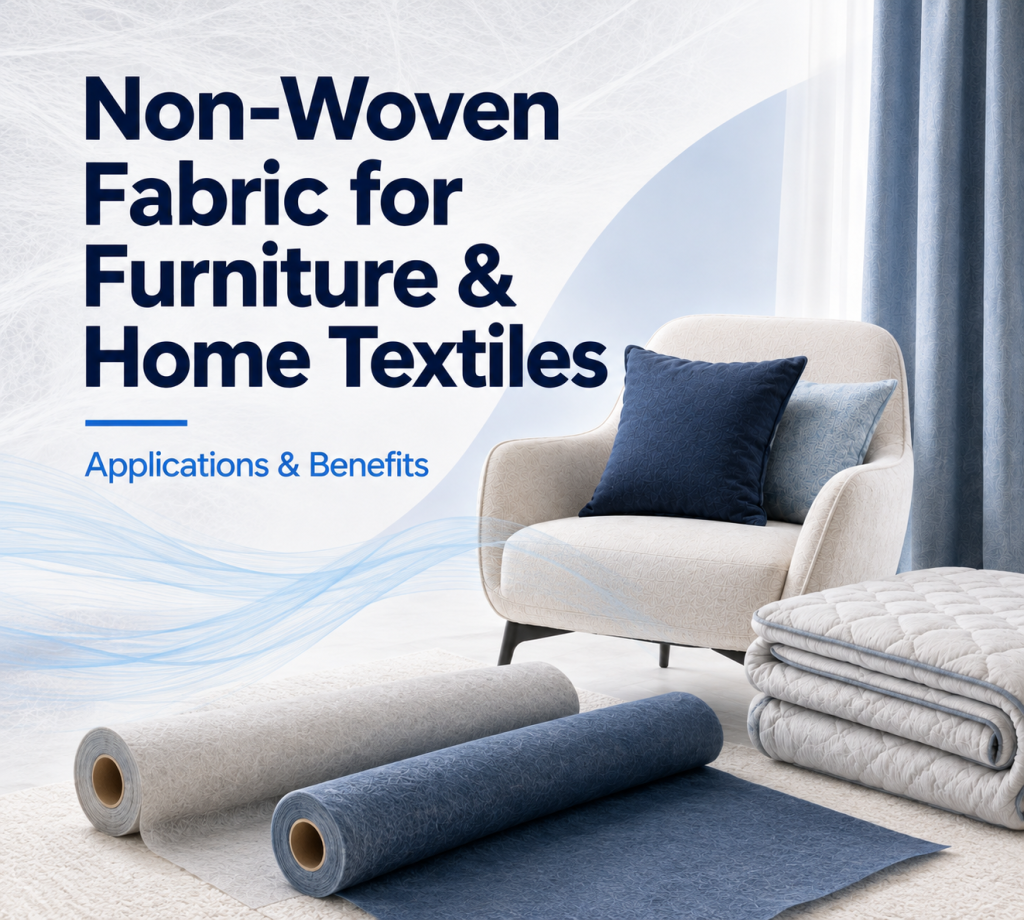
Non-woven fabric for furniture has quietly become one of the most important materials in modern interiors, and today it shapes everything from your sofa cushions to your mattress lining. Moreover, this versatile textile blends strength, comfort, and affordability in a way that traditional woven cloth often cannot match. As a result, furniture makers, upholstery specialists, and home décor brands increasingly rely on it. In this complete guide, you will discover how non-woven fabric for furniture and home textiles works, where it fits, and why it delivers such strong value for both manufacturers and everyday households.
What Is Non-Woven Fabric for Furniture?
To begin with, non-woven fabric for furniture is a textile made by bonding fibres together mechanically, thermally, or chemically, rather than weaving or knitting them. Consequently, the material forms a smooth, sheet-like structure without the interlaced threads you find in ordinary cloth. Manufacturers usually create it from polypropylene, polyester, or blended synthetic fibres.
Furthermore, the production process gives designers remarkable control over thickness, softness, and durability. Because of this flexibility, a single factory can produce lightweight lining for cushions and heavy-duty backing for upholstered frames. In addition, the fabric resists fraying, so cutting and stitching stay clean and simple. Therefore, workshops save time and reduce material waste on every project. Above all, this efficiency explains why so many furniture brands have shifted toward non-woven textiles in recent years.
Key Benefits of Non-Woven Fabric in Home Textiles
Firstly, the benefits of non-woven fabric for home textiles start with durability. The bonded fibre structure holds its shape under daily pressure, and it rarely tears or stretches out of form. Secondly, the material offers excellent breathability, so cushions and mattresses feel comfortable across seasons.
In addition, this fabric brings clear cost advantages. Because production is fast and requires fewer steps, prices stay competitive without sacrificing quality. Meanwhile, the lightweight nature of non-woven material lowers shipping costs and makes assembly easier for workers.
Notably, hygiene stands out as another strong benefit. Many non-woven home textiles resist dust, moisture, and mildew, and some grades even include antibacterial treatments. Consequently, families enjoy cleaner, healthier furniture with less maintenance. Finally, the fabric supports sustainability goals, since several varieties are recyclable and reusable. Ultimately, these combined advantages make it a smart choice for modern living spaces.
Common Applications of Non-Woven Fabric in Furniture
Now, let us look at where non-woven fabric for furniture actually appears, because its uses stretch far wider than most people expect.
Upholstery Backing and Lining
Upholsterers depend heavily on non-woven fabric as a hidden backing layer beneath decorative covers. This layer protects the foam, adds structure, and prevents dust filtration through the seat. In turn, the visible fabric lasts longer and stays smooth. For instance, sofas and armchairs almost always contain at least one non-woven lining between the frame and the outer material.
Mattress and Cushion Construction
Similarly, mattress makers use non-woven textiles as insulator pads and quilt backings. These layers separate the springs from the comfort foam, and they stop internal components from shifting. As a result, the mattress feels stable and supportive night after night. Additionally, cushion inserts often rely on soft non-woven wadding to hold filling evenly in place.
Dust Covers and Frame Wrapping
Underneath most sofas, you will find a thin black non-woven dust cover. This sheet keeps debris from falling out, and it protects the internal structure during transport. Because it is lightweight yet tough, it wraps easily around wooden frames. Therefore, manufacturers use it to give products a clean, finished appearance from every angle.
Non-Woven Fabric for Home Textiles Beyond Furniture
Beyond seating and bedding, the uses of non-woven fabric in home textiles appear across the entire household, and non-woven fabric for home textiles shows up in more places than most buyers realise. For example, curtains, blinds, and decorative wall panels frequently include this material for its clean drape and easy handling. In addition, tablecloths, placemats, and disposable napkins often use lighter grades because they combine style with convenience.
Moreover, storage and organisation products rely on it too. Foldable wardrobes, shoe organisers, and storage boxes typically use rigid non-woven sheets that hold their shape yet fold flat when empty. Meanwhile, cleaning textiles such as reusable wipes and mop pads take advantage of the fabric’s absorbency. Consequently, the same core material supports décor, comfort, and daily chores at once. Indeed, this wide adaptability is exactly why designers describe non-woven material as one of the most flexible textiles available for the home.
Why Manufacturers Prefer Non-Woven Material
From a production standpoint, non-woven fabric for furniture simply makes business sense. To start, factories can adjust the weight and finish on demand, so they meet different customer needs from a single line. Furthermore, the fabric arrives in large, uniform rolls, which reduces handling and keeps quality consistent.
In addition, the material accepts printing, laminating, and coating with ease. Therefore, brands can add patterns, waterproof layers, or flame-retardant finishes without switching suppliers. Because these options exist, one non-woven textile can serve premium and budget product lines alike.
Equally important, the fabric supports faster manufacturing cycles. Since it does not fray, machines cut it cleanly and stitch it quickly. As a result, output rises while labour costs fall. Overall, these practical strengths explain why a leading furniture fabric manufacturer, including experienced Indian producers, continues to expand its non-woven fabric ranges for the furniture and home textile sectors.
How to Choose the Right Non-Woven Fabric
Choosing the correct non-woven fabric for furniture depends on a few clear factors, and a little planning prevents costly mistakes. First, consider the weight, usually measured in GSM (grams per square metre). Heavier grades suit structural backing, while lighter grades work well for linings and covers.
Next, think about the finish. If moisture resistance matters, then a laminated or coated non-woven material delivers better protection. Meanwhile, breathability suits mattresses and seat cushions, so an untreated grade often performs best there.
Additionally, always check safety certifications. Reputable suppliers provide flame-retardant and non-toxic options that meet furniture standards. Because these details affect both comfort and compliance, buyers should request samples before ordering in bulk. Finally, partner with a trusted home textile fabric supplier who understands home textile applications. Indeed, a dependable non-woven fabric supplier secures consistent quality, reliable supply, and fabric that genuinely fits your product.
The Sustainability Angle of Non-Woven Home Textiles
Sustainability now drives many purchasing decisions, and non-woven fabric for home textiles responds well to this shift. Firstly, several varieties use recycled polyester fibres, so waste plastic finds a second life inside your furniture. Secondly, the material is often fully recyclable at the end of its use.
Moreover, efficient production means less energy and water compared with many woven alternatives. Therefore, the environmental footprint stays comparatively low. In addition, the fabric’s durability keeps products in use longer, which reduces replacement frequency. Because long-lasting goods generate less landfill waste, eco-conscious buyers appreciate this quality. Ultimately, choosing responsible non-woven material helps brands and households support greener homes without giving up performance.
Conclusion: A Smart Choice for Modern Homes
In summary, non-woven fabric for furniture and home textiles offers a rare mix of strength, comfort, affordability, and sustainability. From upholstery backing and mattress layers to curtains, storage, and cleaning products, this adaptable material touches nearly every corner of the modern home. Furthermore, its efficient production and customisable finishes make it a favourite among manufacturers who value both quality and speed.
As demand for durable, hygienic, and eco-friendly interiors keeps growing, non-woven textiles will only become more central to how we build and furnish our spaces. Therefore, whether you are a furniture maker sourcing reliable backing or a homeowner seeking longer-lasting comfort, this fabric deserves your attention. To get the best results, always work with an experienced non-woven fabric supplier who can match the right grade to your exact needs.
Get the Right Non-Woven Fabric for Your Furniture Project
Ready to upgrade your products with premium non-woven fabric for furniture and non-woven fabric for home textiles? As a trusted furniture fabric manufacturer and home textile fabric supplier, Savitridevi Polyfabrics produces high-quality non-woven material in a full range of weights, finishes, and custom specifications. Moreover, our team helps you choose the perfect grade for upholstery, mattresses, dust covers, and home décor. Therefore, if you need a reliable non-woven fabric supplier, contact us today for samples, bulk pricing, and expert guidance — and give your products the strength, comfort, and durability your customers deserve.
Frequently Asked Questions (FAQs)
1. Which type of non-woven fabric is best for sofas and upholstery?
For sofas, a medium-to-heavy GSM non-woven fabric for furniture works best as backing and dust cover. Moreover, polypropylene grades offer strength and tear resistance. Therefore, they support the frame well while keeping the seat clean and long-lasting.
2. What GSM of non-woven fabric should I use for home textiles?
The right GSM depends on the product. For lightweight items like napkins, 20–40 GSM suits well, whereas mattresses and covers need heavier non-woven fabric for home textiles around 70–150 GSM. Additionally, always confirm the grade with your supplier before ordering.
3. Is non-woven fabric better than woven fabric for furniture?
In many cases, yes. Non-woven fabric for furniture costs less, resists fraying, and cuts faster than woven cloth. Furthermore, it offers strong structure and breathability. However, woven fabric may still suit visible decorative surfaces that need a premium finish.
4. Can I get custom non-woven fabric for my furniture brand?
Absolutely. A reliable furniture fabric manufacturer can supply custom weights, colours, prints, and finishes such as laminated or flame-retardant grades. Therefore, brands can match the exact specification they need. In addition, most suppliers offer samples before bulk production.
5. How do I find a trusted non-woven fabric supplier?
To find a dependable non-woven fabric supplier, first check certifications, product range, and customer reviews. Next, request samples to test quality directly. Because consistency matters, choose an established home textile fabric supplier with proven manufacturing experience, like Savitridevi Polyfabrics.