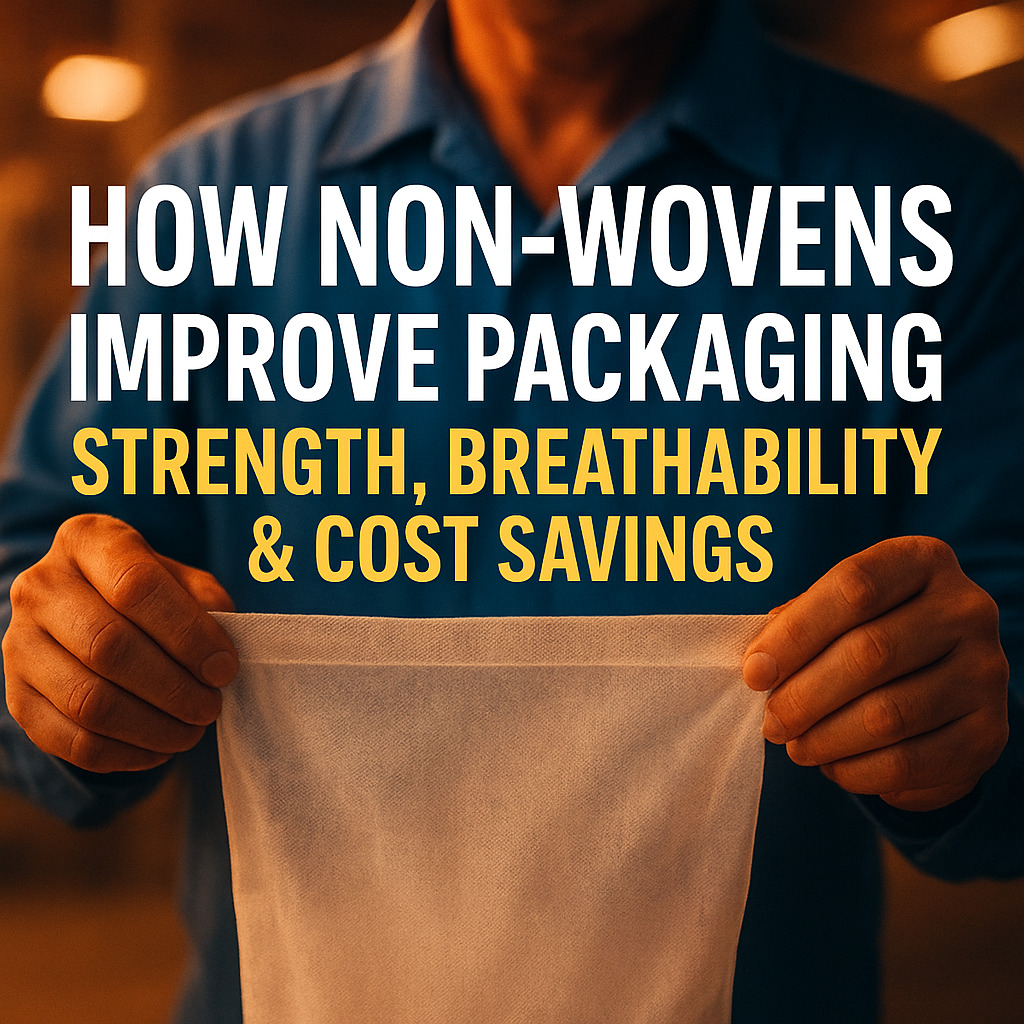
In recent years, nonwoven materials have revolutionized the packaging industry, our non woven manufacturers in Hyderabad providing a perfect blend of strength, breathability, and cost savings. These innovative materials offer superior functionality compared to conventional packaging options like paper, plastic, or woven fabrics. The question many industries now ask is: “How Non-Wovens Improve Packaging: Strength, Breathability & Cost Savings?”
With the rise of sustainability and demand for durable yet lightweight materials, non woven manufacturers in Hyderabad have been at the forefront of this transformation. They are producing advanced nonwoven packaging materials that meet the growing needs of sectors such as retail, food, pharmaceuticals, and logistics offering eco-friendly, cost-effective, and high-performance alternatives.
What Are Nonwoven Packaging Materials?
Nonwoven materials differ significantly from traditional woven or knitted fabrics. They are made by bonding or interlocking fibers through mechanical, thermal, or chemical processes, resulting in a strong, flexible, and breathable structure. This manufacturing process eliminates the need for weaving threads, giving nonwovens their signature durability and adaptability.
Non woven bag manufacturers in Hyderabad use high-quality fibers such as polypropylene and polyester, which offer excellent tensile strength, chemical resistance, and light weight. Manufacturers layer these fibers into webs or sheets and bond them using methods like needle punching, heat fusion, or adhesive binding. This process creates a versatile material suitable for various packaging applications, ranging from disposable grocery bags to luxury product liners.
For instance, polypropylene nonwovens are often used for disposable packaging due to their water resistance and low production cost. Polyester nonwovens, on the other hand, are preferred for reusable and heavy-duty packaging solutions because of their durability and flexibility.
Common examples include:
Nonwoven polypropylene bags for groceries and retail.
Protective liners and envelopes for electronics and fragile goods.
Luxury packaging materials for high-end products.
By combining practicality with visual appeal, nonwoven materials have set new standards in modern packaging efficiency.
Key Advantages of Nonwoven Packaging
- Exceptional Strength and Durability
Nonwoven materials are engineered for superior mechanical performance. Their tear-resistant structure ensures that packaging maintains its integrity even under stress. Whether used for heavy goods or delicate items, these fabrics provide long-lasting protection during transport and handling.
non woven bags manufacturers in hyderabad continuously refine production methods to improve tensile strength while maintaining flexibility, making them ideal for industries requiring both durability and cost efficiency. - Lightweight Yet Sturdy
Unlike cardboard or hard plastics, nonwovens are incredibly lightweight without compromising structural integrity. This helps reduce overall shipping costs, fuel consumption, and handling effort. The lighter weight also improves logistics efficiency while keeping products safe from external impacts. - Cost-Effective and Resource-Efficient
Another major benefit is cost savings. The production process for nonwovens requires fewer resources than traditional materials like paperboard or moulded plastics. Non woven manufacturers in Hyderabad use automated and energy-efficient systems that lower production costs, allowing businesses to enjoy affordable yet high-performance packaging solutions. - Breathability and Moisture Control
One of the standout features of nonwoven packaging is its breathability. The porous structure of the fabric allows air to circulate while still providing adequate protection from dust and moisture. This makes it ideal for packaging perishable goods, fresh produce, or medical products that require ventilation to maintain quality.
Breathable packaging prevents condensation, ensuring that items remain fresh and intact throughout their shelf life.
- Eco-Friendly and Sustainable
Sustainability is now a key factor in packaging decisions. Nonwoven fabrics can be recycled and reused, making them a greener alternative to single-use plastics. Many non woven manufacturers in Hyderabad are adopting biodegradable and compostable materials to further reduce environmental impact.
Some nonwoven fabrics are made from recycled fibers, supporting circular economy practices and helping businesses achieve their sustainability goals without compromising quality. - Versatility Across Industries
From e-commerce to agriculture, nonwoven materials are adaptable to nearly every sector. They are used to produce shopping bags, packaging liners, shipping envelopes, and even protective wraps for machinery and furniture. Their ability to be cut, printed, and laminated adds extra value for branding and customization.
Technological Innovations in Nonwoven Packaging
Innovation drives the growth of the nonwoven industry. Non woven manufacturers in Hyderabad are adopting advanced technologies to improve product performance and efficiency.
Automated production lines allow for precise fiber layering and uniform density, improving strength and durability.
Eco-friendly adhesives and bonding agents reduce chemical usage while maintaining robust fiber bonding.
UV-resistant coatings and water-repellent finishes enhance protection in outdoor or moisture-prone environments.
These innovations make nonwoven packaging not only stronger and more functional but also more sustainable in the long term. Manufacturers can now design customized solutions tailored to specific industry needs, whether for heavy-duty industrial packaging or lightweight retail bags.
How Non-Wovens Offer Cost Savings
Cost efficiency is one of the primary reasons nonwoven materials have gained widespread popularity. Here’s how they help businesses save money:
Reduced Material Waste: Nonwovens can be precisely cut to size, minimizing production waste.
Lower Shipping Costs: Their lightweight structure decreases transportation expenses.
Reusability: Nonwoven bags and wraps can be reused multiple times, reducing replacement costs.
Minimal Maintenance: Nonwoven materials resist tearing, moisture, and chemical damage, lowering product returns and packaging failures.
Because of these advantages, many organizations partner with non woven manufacturers in Hyderabad to create customized packaging solutions that optimize cost without sacrificing quality or sustainability.
Sustainability and Environmental Impact
The environmental advantages of nonwoven materials extend far beyond recyclability. Biodegradable variants are now available, made using natural fibers and eco-friendly bonding techniques. This ensures that packaging decomposes safely without releasing harmful substances.
Non woven manufacturers in Hyderabad have also invested in green production technologies, using renewable energy sources and water-efficient systems. The result is a packaging solution that reduces carbon emissions, conserves resources, and aligns with global sustainability goals.
Applications Across Different Sectors
Nonwoven packaging materials are widely used across industries due to their adaptability:
Food Packaging: Ensures breathability for fresh produce while maintaining hygiene.
Medical & Pharmaceutical: Provides sterile, lightweight, and safe packaging for medical equipment.
Retail & E-Commerce: Offers durable, reusable bags and protective covers for shipments.
Industrial Use: Protects mechanical parts and tools from corrosion and dust.
Each application benefits from the superior strength, air permeability, and sustainability that only nonwovens can provide.
Conclusion
The packaging industry is evolving rapidly, and nonwoven materials are leading this transformation. They combine strength, breathability, and cost savings with environmental responsibility, offering a holistic solution for modern businesses.
As demand for eco-friendly and high-performance materials grows, Savitridevi Polyfabrics, non woven manufacturers in Hyderabad are playing a pivotal role in meeting this need. Through continuous innovation and sustainable production, they are redefining the future of packaging making it stronger, smarter, and greener.