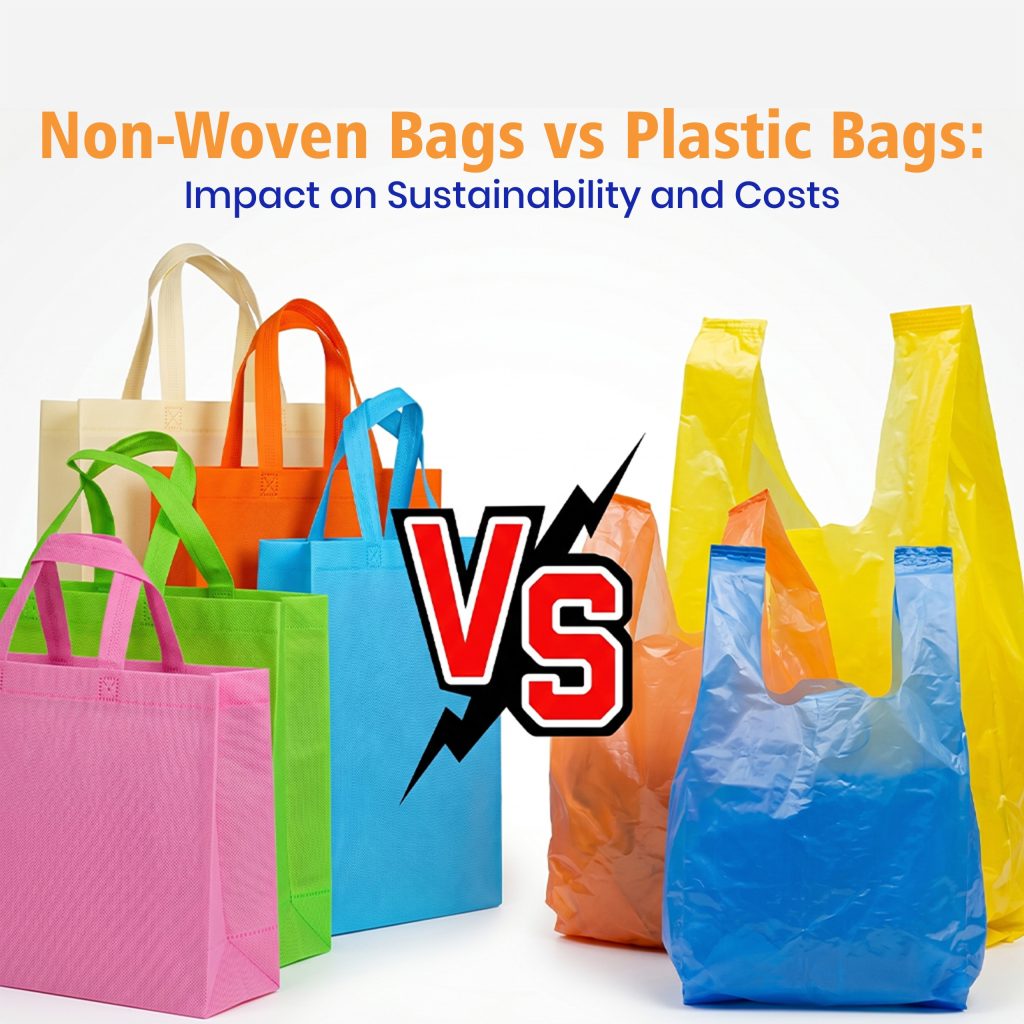
Reusable non-woven bags vs plastic bags is today one of the most important packaging decisions that Indian businesses, retailers, and brand owners face across every industry. India generates over 3.5 million tonnes of plastic waste every single year, and single-use plastic carry bags contribute a massive share of that environmental damage. However, India’s landmark plastic ban of 2022 has permanently changed the rules for every business operating across the country. Consequently, plastic bag alternatives India businesses can rely on — particularly non-woven carry bags made from PP spunbond material — are witnessing unprecedented demand from supermarkets, garment exporters, pharmacies, and e-commerce companies. Moreover, businesses that switch to reusable shopping bags India suppliers provide are discovering genuine long-term cost advantages alongside outstanding environmental benefits.
Why India’s Plastic Ban Made Non-Woven Bags vs Plastic Bags a Business Priority
The plastic ban in India enforcement began seriously on July 1, 2022, under the Environment Protection Act. The Government of India prohibited the manufacture, import, stocking, distribution, sale, and use of identified single-use plastic items — including plastic carry bags below 75 microns. Furthermore, from December 2022, all bags below 120 microns were completely banned across all states and union territories without exception.
This decision created an immediate and urgent need for plastic bag alternatives India businesses could use reliably at scale. Retailers needed bags that were strong, affordable, brandable, and fully compliant with the new regulations. Therefore, non-woven carry bags made from PP spunbond material emerged as the most practical, cost-effective, and widely available plastic ban in India alternative available in the market.
Additionally, the ban created a genuine opportunity for manufacturers, distributors, and brand owners to reposition themselves as environmentally responsible businesses. Consequently, the demand for eco-friendly shopping bags across India’s organised retail sector grew by an estimated 60–70% within the first year of the ban’s enforcement. This remarkable growth continues to accelerate across both urban and semi-urban markets today.
How India’s Plastic Ban Directly Drives Demand for Eco-Friendly Non-Woven Bags
- Single-use plastic carry bags below 120 microns are completely banned across all Indian states
- All retail outlets, supermarkets, and e-commerce companies must now use compliant alternatives
- Non-woven bags vs plastic bags — non-woven clearly qualifies as fully compliant under current regulations
- Government actively promotes reusable carry bags India adoption under the Swachh Bharat Mission
- International export buyers increasingly require plastic-free, sustainable packaging solutions India suppliers offer
Sustainability of Non-Woven Bags vs Plastic Bags: What the Numbers Say
The sustainability comparison of non-woven bags vs plastic bags covers three critical dimensions — environmental impact during production, reusability across the product’s lifetime, and responsible end-of-life management. Understanding all three dimensions helps Indian businesses make genuinely informed and confident packaging decisions.
Environmental Impact: Eco-Friendly Non-Woven Bags vs Single-Use Plastic
Plastic bags take between 400 and 1,000 years to decompose in landfills and water bodies across India. During that long process, they break down into microplastics that permanently contaminate soil, groundwater, rivers, and marine ecosystems. Furthermore, plastic bag production consumes significantly more petroleum-based raw materials per unit than eco-friendly non-woven bags production does at comparable scale.
Reusable non-woven bags, in contrast, are made from polypropylene — a material that is fully recyclable at the end of its useful life. Moreover, because a single non-woven carry bag replaces hundreds of single-use plastic bags over its entire lifetime, its total carbon footprint per individual use is dramatically lower than any disposable alternative available today. Therefore, switching to sustainable packaging solutions India businesses adopt is not just a regulatory requirement — it is a genuinely responsible environmental decision with measurable, positive impact on India’s plastic waste crisis.
Additionally, PP spunbond non-woven fabric production generates significantly less manufacturing waste compared to woven polypropylene or cotton bag production. This makes eco-friendly shopping bags Indian businesses adopt increasingly aligned with global ESG standards and international sustainability reporting requirements that export-oriented companies must now meet.
Reusability and Durability: The Core Benefits of Non-Woven Bags
The benefits of non-woven bags over plastic alternatives become most evident when examining their reusability and real-world durability. Reusable shopping bags India consumers and businesses use daily handle loads of up to 8–12 kilograms reliably, depending on the GSM of fabric used in construction.
Furthermore, with proper care, a well-manufactured reusable carry bag India businesses trust lasts four to five years of regular daily use — representing outstanding value compared to a plastic bag that typically survives a single shopping trip before disposal. Therefore, from a genuine circular economy perspective, reusable non-woven bags vs plastic bags is not a close comparison at all. Eco-friendly non-woven bags win decisively on every dimension of sustainability that matters to modern Indian consumers, progressive businesses, and government regulators alike.
Cost Comparison: Non-Woven vs Plastic Bags for Indian Businesses
Many Indian business owners initially assume that reusable shopping bags India suppliers charge significantly more than plastic bag suppliers on a per-unit basis. However, this assumption changes dramatically when businesses calculate the cost comparison non-woven vs plastic bags over time rather than evaluating the per-unit cost alone.
Why the Cost Comparison Non-Woven vs Plastic Bags Favours Non-Woven Over Time
A standard non-woven carry bag costs between ₹8 and ₹25 per unit depending on GSM, size, and custom printing requirements. A comparable plastic carry bag costs ₹2 to ₹5 per unit. Therefore, the upfront per-unit cost of reusable carry bags India businesses order appears higher at first glance but this surface-level comparison completely misses the real picture.
However, consider that the average eco-friendly non-woven bag is reused 50 to 100 times by a customer before it finally wears out. Consequently, the per-use cost of a ₹15 non-woven bag used 75 times works out to just ₹0.20 per use a fraction of the cost of any disposable plastic alternative. Furthermore, businesses that brand their non-woven carry bags with their logo and colours gain continuous brand visibility every single time a customer reuses the bag in public delivering ongoing marketing value that a plastic bag never delivers.
Additionally, with the plastic ban in India enforcement now actively penalising non-compliant businesses, the risk cost of continuing to use banned plastic bags must factor into any honest cost comparison non-woven vs plastic bags. Government fines and business disruption from regulatory inspections add significant hidden costs to the plastic bag option that most businesses dangerously underestimate.
Key Benefits of Non-Woven Bags for Every Indian Industry
Benefits of non-woven bags extend far beyond simple compliance with India’s plastic ban. Sustainable packaging solutions India businesses need today must deliver on durability, branding, cost efficiency, and environmental responsibility simultaneously — and eco-friendly non-woven bags achieve all four consistently.
Retail and Supermarkets are the largest users of reusable shopping bags India wide. Major retail chains have adopted branded non-woven bags as their standard carry solution. Moreover, these bags function as powerful, mobile brand advertisements every time customers carry them in crowded public spaces across Indian cities.
Garment and Textile Exporters use eco-friendly non-woven bags for packing finished garments because the breathable, dust-resistant material protects products during transit. Furthermore, international buyers increasingly require sustainable packaging documentation making non-woven carry bags a commercial necessity for Indian exporters targeting global markets.
Pharmacies and Healthcare Retailers benefit from the clean, professional appearance of white reusable carry bags India suppliers manufacture. Additionally, hydrophobic non-woven grades resist moisture — an important and practical feature for pharmaceutical and medical retail packaging applications.
Blue Horse PP Spunbond Non-Woven Bags: India’s Trusted Sustainable Packaging Solution
Savitridevi Polyfabrics (India) Pvt. Ltd. manufactures premium eco-friendly non-woven bags under the trusted Blue Horse brand from its production facility in Hyderabad, Telangana. Every bag delivers consistent GSM, clean stitching, reliable handle strength, and vibrant custom printing — ensuring outstanding performance for retail, industrial, and export applications across all Indian markets.
The Blue Horse reusable carry bags India businesses rely on cover all standard and custom sizes, with fabric from 60 GSM to 120 GSM, available in all colours with custom logo printing for bulk orders. Furthermore, both laminated and non-laminated options are available — giving businesses the right combination of durability, water resistance, and visual appeal for their specific packaging use case and budget.
Therefore, whether you are a retail chain owner, an e-commerce brand, a garment exporter, or an agri-input distributor, Blue Horse eco-friendly shopping bags deliver the quality, compliance, and brand impact your business needs. Visit savitripolyfab.com today to request free samples, get bulk pricing, or speak directly with our team about custom plastic bag alternatives India businesses can trust.
Conclusion
The debate between reusable non-woven bags vs plastic bags has effectively been settled — by Indian regulators, by real cost analysis, and by the clear shift in consumer and buyer expectations across every market segment. The plastic ban in India makes compliance non-negotiable for every business operating in the country today. Moreover, the benefits of non-woven bags over plastic alternatives are measurable, documented, and increasingly demanded by customers and international buyers simultaneously.
Make the right choice for your business and your environment — choose Blue Horse reusable carry bags India trusts, by Savitridevi Polyfabrics today.Savitridevi Polyfabrics (India) Pvt. Ltd. | Hyderabad, Telangana
Frequently Asked Questions
Q1. What is the difference between reusable non-woven bags vs plastic bags?
Reusable non-woven bags vs plastic bags — non-woven bags last 4–5 years replacing 500 plastic bags, are plastic ban compliant, fully brandable, and cost just ₹0.20 per use compared to ₹2–₹5 for a single-use plastic bag.
Q2. Are non-woven carry bags compliant with India’s plastic ban?
Yes, non-woven carry bags made from PP spunbond fabric are fully compliant with India’s 2022 plastic ban and are approved as plastic bag alternatives India businesses can legally use across all sectors.
Q3. What are the key benefits of non-woven bags for Indian businesses?
The benefits of non-woven bags include plastic ban compliance, 50–100 reuses per bag, custom branding opportunity, low per-use cost, strong durability, and positive customer perception — making them the best sustainable packaging solution India businesses can adopt.
Q4. How does the cost comparison non-woven vs plastic bags work out over time?
The cost comparison non-woven vs plastic bags shows that although non-woven bags cost more upfront, their 50–100 reuses bring the per-use cost to just ₹0.15–₹0.30 — saving businesses up to 40% on total packaging costs over three years.
Q5. Where can I buy Blue Horse eco-friendly non-woven bags in bulk across India?
You can purchase Blue Horse eco-friendly shopping bags directly from Savitridevi Polyfabrics (India) Pvt. Ltd., Hyderabad — visit savitripolyfab.com for free samples, bulk pricing, and expert guidance on reusable shopping bags India wide.
A través de este sitio, quienes accedan podrán recibir financiamiento por internet.
Este recurso brinda opciones de crédito adaptables las cuales se ajustan a las necesidades del solicitante.
https://github.com/foulegold/media/wiki/Financial-Stress-and-the-Appeal-of-Alternative-Income-Sources
La solicitud resulta simple y se lleva a cabo de forma totalmente en línea, sin trámites engorrosos.
Además, la plataforma pretende proporcionar una experiencia rápido y de confianza a quienes lo utilizan.
A través de esta plataforma, quienes accedan podrán acceder a financiamiento de forma digital.
El servicio presenta modalidades de préstamo adaptables que responden a las necesidades de cada usuario.
MobCash
El trámite es simple y se realiza de manera completamente en línea, sin trámites presenciales.
Además, la plataforma procura ofrecer una experiencia ágil así como confiable para quienes lo utilizan.
Теплоизоляционные материалы играет критическую роль в удержании тепла внутри здания.
Эффективная защита позволяет значительно сократить затраты на отопление и охлаждение зданий.
https://souzmultdesign.ru/culture/2317-sravnitelnyy-analiz-kauchukovoy-izolyatsii-i-polimernykh-alternativ-v-elektroenergetike.html
Помимо этого, утепление препятствует образование влаги, плесени и промерзания стен.
Следовательно, правильная изоляция гарантирует экономию ресурсов и уютный климат в здании.